


Investing in Palm Beach Real Estate Wisely
- 1 day ago
- 6 min read
Palm Beach rarely rewards casual decision-making. A beautiful home on a coveted street can hold value for reasons that are obvious at first glance, but the strongest investments are often shaped by details that only become clear when you know the market well. For buyers focused on investing in Palm Beach real estate, that distinction matters. In a market defined by prestige, privacy, and limited inventory, value is not created by square footage alone.
Some properties command attention because they are on the water. Others carry weight because of architecture, street placement, lot dimensions, or proximity to the right part of town. In Palm Beach, pricing is often about scarcity as much as condition. That is why investment decisions here benefit from a more selective lens than buyers might use in broader luxury markets.
Why investing in Palm Beach real estate is different
Palm Beach is not a volume market. It is a highly specialized residential market where a small number of transactions can shape perception, pricing, and negotiating conditions across an entire season. That creates opportunity, but it also means buyers should be careful about applying broad Florida assumptions to a very specific luxury environment.
One of the strongest advantages for investors is supply constraint. In many areas, additional inventory can soften values. In Palm Beach, the combination of limited land, established neighborhoods, and sustained global demand supports long-term desirability. Buyers are not simply purchasing a residence. They are acquiring a position in a tightly held market with a reputation that extends far beyond local boundaries.
That does not mean every property is a smart investment. Premium markets can still punish overpaying, poor location selection, or underestimating carrying costs. In a place where high-value homes often trade on nuance, the difference between an exceptional purchase and an average one can come down to lot exposure, renovation quality, or whether a block has enduring appeal.
What tends to hold value best
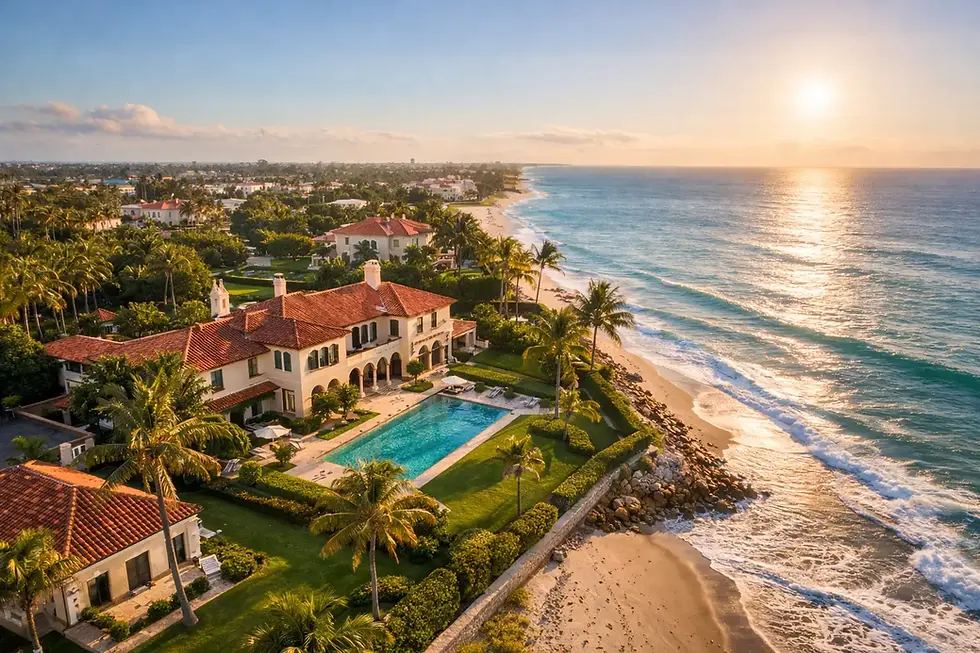
The most resilient properties in Palm Beach usually share one trait: they remain desirable even when buyer sentiment becomes more selective. Waterfront homes often fit that profile, especially when the setting, views, and docking potential align with what luxury buyers want. Yet waterfront is not automatically superior. Exposure, seawall condition, privacy, and flood-related considerations all influence whether a property is truly compelling.
Historic homes can also perform well, particularly when they have architectural integrity and have been updated with restraint. Buyers in this segment often pay for character, but they also expect livability. A house that preserves its identity while meeting modern standards can attract stronger demand than one that feels either untouched or over-altered.
There is also consistent interest in well-positioned in-town properties. For some buyers, walkability to Worth Avenue, beach access, and a central location matter more than expansive grounds. These homes can be especially appealing when they offer ease of ownership and a polished, low-maintenance lifestyle.
The broader point is simple: strong value retention usually comes from a combination of rarity, location, and buyer relevance. A large home without the right setting may not outperform a smaller residence in a more prized location.
The risks affluent buyers should look at closely
Luxury markets invite emotion. Palm Beach, perhaps more than most, can encourage buyers to move quickly when the right property appears. Speed can be appropriate, but not at the expense of discipline.
The first risk is assuming every Palm Beach address carries equal investment strength. Streets differ. Sections of town differ. Water orientation differs. Even homes that appear similar on paper can trade very differently depending on privacy, traffic patterns, neighboring estates, and long-term desirability.
The second risk is overestimating the value of cosmetic improvement. In a market at this level, buyers can be exacting. A renovation that is expensive but too personal, poorly executed, or out of character with the property may not deliver the premium an owner expects. Thoughtful updates matter. So does restraint.
Another consideration is ownership cost. Insurance, taxes, property upkeep, and the demands of maintaining a high-value coastal residence should be assessed from the start. Sophisticated buyers understand that acquisition price is only one part of the equation. An attractive purchase becomes less attractive if ongoing costs significantly alter the holding strategy.
Timing also deserves perspective. Palm Beach has seasons of strong momentum, but serious investors should avoid treating any short window of activity as a guarantee of future performance. The better approach is to buy a property that would remain desirable across different market conditions.
How to evaluate a property like an investor, not just a buyer
The best investment purchases usually satisfy both financial and lifestyle logic. If a home appeals only as a personal indulgence, resale may be narrower. If it appeals only on paper but lacks warmth or usability, future demand can also be limited.
Start with the fundamentals that cannot be easily changed. Location within town, lot quality, privacy, view orientation, and street presence deserve more weight than finishes or staging. Kitchens can be redesigned. Landscaping can mature. A compromised setting is far harder to correct.
Then look at market position. Ask where the home sits within its immediate segment. Is it one of the better options on its street or one of the weaker ones? Does it have a feature set that will still stand out when newer listings come to market? In Palm Beach, relative ranking matters because buyers at the top of the market compare properties very carefully.
Condition should be judged through a luxury-market lens. A property does not need to be newly renovated to be a strong investment, but deferred maintenance, dated systems, or design choices that conflict with the home’s architecture can affect both future cost and resale velocity.
Finally, consider your exit audience before you buy. The most strategic purchases usually have broad appeal within the luxury segment they serve. A property that attracts multiple types of future buyers often offers more flexibility than one with a very narrow profile.
Investing in Palm Beach real estate with a long view
Short-term price movement can attract attention, but Palm Beach tends to reward patience, quality, and precision. Investors who do well here usually understand that the goal is not merely to own in a famous market. It is to own the right property in the right position.
That may mean paying a premium for a superior location instead of chasing perceived value on a less desirable block. It may mean passing on a dramatic house that feels exciting today but presents unnecessary complications later. It may also mean recognizing when a discreet, impeccably located residence offers stronger long-term security than a more obvious trophy property.
This is where local expertise becomes essential. In a market with so much off-market conversation, micro-neighborhood variation, and design-driven pricing, broad data only tells part of the story. Buyers benefit from guidance that understands not just recent sales, but why certain homes outperformed others and which details sophisticated purchasers continue to prioritize.
For clients considering a strategic purchase, a boutique Palm Beach specialist such as Victoria’s Luxury Estates can offer the kind of direct market perspective that larger, less focused approaches often miss. In a market this refined, local knowledge is not a luxury. It is part of the investment itself.
Who is best positioned to buy now
The strongest candidates for ownership in Palm Beach are typically buyers who value asset quality over speed and exclusivity over scale. They are comfortable being selective. They understand that waiting for the right fit can be wiser than forcing a transaction because inventory feels tight.
This market also tends to suit buyers who want their investment to serve more than one purpose. A residence here can provide personal enjoyment, legacy appeal, and long-term value preservation, but only if the purchase is made with clarity. Chasing trends rarely works as well as aligning with the enduring characteristics that define Palm Beach at its best.
For some, the right opportunity will be a waterfront estate with lasting prestige. For others, it will be a historic residence with irreplaceable charm or an elegant in-town property that offers convenience and discretion. The exact strategy depends on goals, time horizon, and tolerance for ongoing ownership demands.
Palm Beach remains one of the country’s most distinctive residential markets because it offers something rare: real scarcity paired with global desirability. If you approach it with careful judgment, local insight, and an eye for what will still matter years from now, the best opportunities tend to reveal themselves quietly - and hold their appeal long after the moment of purchase.


Comments