

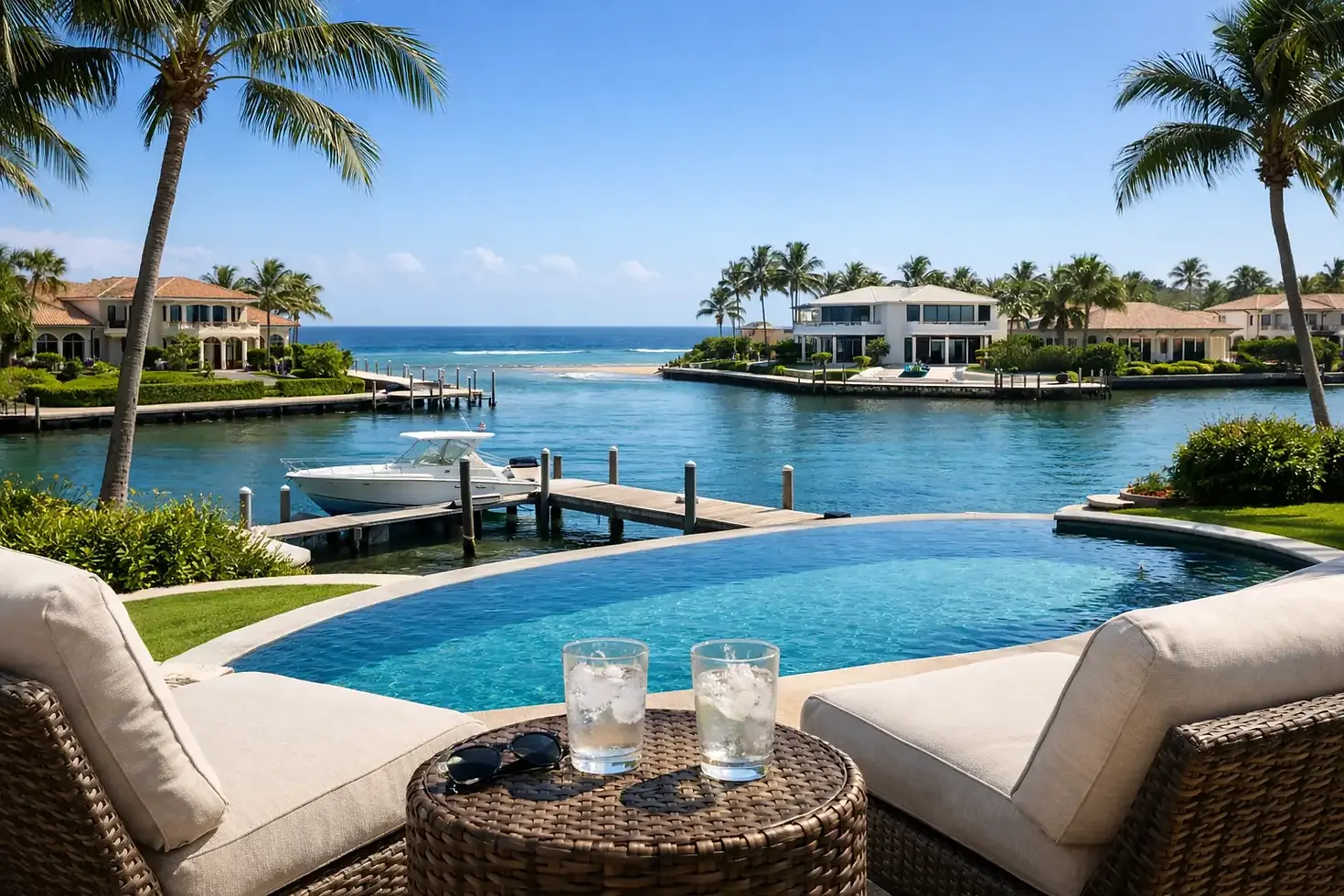
Guide to Selling Waterfront Homes in Palm Beach
A waterfront property is never simply a house with a view. In Palm Beach, its value is shaped by water access, dockage, outlook, elevation, privacy, architectural character, and the lifestyle it makes possible. This guide to selling waterfront homes is designed for owners who want to position an exceptional residence with the precision the market expects.
The best waterfront sales rarely begin with a listing date. They begin with a clear assessment of what makes the property distinct, which buyers are most likely to value those advantages, and how the residence should be presented without compromising the owner’s privacy. A thoughtful strategy can protect both the home’s market position and the experience of selling it.
Start With the Waterfront Story
Buyers at the upper end of the market do not evaluate every waterfront home by the same standard. Oceanfront, Intracoastal, lakefront, and canal-front residences offer different experiences, and the details matter. A buyer who wants broad water views may place a premium on orientation and sightlines. A boating-focused buyer may focus first on dock configuration, water depth, bridge clearance, and access to open water.
The property’s story should be specific rather than generic. “Waterfront” alone is not a strategy. The meaningful details may include sunrise or sunset exposure, protected water views, a private beach approach, a deepwater dock, a quiet location off a major waterway, or the way the architecture frames the landscape from primary living spaces.
Historic character can also influence positioning. A Palm Beach residence with architectural provenance, original details, or a notable estate setting calls for a different presentation than a contemporary home designed around indoor-outdoor entertaining. Both can command attention, but they should not be marketed as though they appeal to the same buyer.
Price the Property for Its Actual Position
Pricing waterfront property requires more than comparing square footage and recent nearby sales. Two homes a short distance apart can differ materially in value because of their water frontage, views, dockage, lot configuration, condition, privacy, or exposure to boat traffic.
A strong pricing analysis examines the most relevant recent sales, current competition, and properties that failed to attract a buyer. It also considers the market’s present pace. A home can be beautifully finished and still be priced ahead of the buyer pool if its value does not align with alternatives available at the same level.
The goal is not to select the highest number that can be supported in conversation. It is to establish a credible position that brings qualified attention early. The first weeks of market exposure are particularly valuable because serious buyers, advisors, and buyer representatives watch closely for properties that are newly available.
It depends, of course, on the owner’s timing and level of flexibility. A seller with no immediate deadline may choose a more patient pricing strategy for a rare property with few true substitutes. A seller who wants to create momentum may benefit from a price that is tightly calibrated to current demand. The right approach should reflect both the residence and the owner’s objectives.
Separate Improvements From Aspirational Value
Major renovations, custom millwork, landscaping, seawall work, and dock improvements can strengthen a home’s appeal. They do not always translate dollar for dollar into the final sale price. Buyers value quality, but they also weigh whether the design suits their preferences and whether they see future work ahead.
Documenting significant improvements is still essential. Organized records, permits where applicable, warranties, service histories, and dates of major updates help buyers understand the care invested in the property. In a high-value transaction, confidence is part of value.
Prepare the Home Without Overproducing It
Waterfront homes should feel effortless, even when preparing them requires careful planning. The objective is to reveal the residence at its best, not to turn it into something unfamiliar to the owner or disconnected from its architecture.
Start with the elements buyers notice immediately: arrival, exterior condition, water-facing terraces, pool areas, landscaping, glazing, and primary entertaining spaces. Clean lines of sight toward the water are especially important. Oversized furnishings, heavy window treatments, or cluttered terraces can diminish the sense of scale and obscure the very feature buyers came to see.
Address visible maintenance before photography or private showings. This may include touch-up painting, pressure cleaning, landscape refinement, pool servicing, exterior lighting, and attention to dock or seawall areas. A waterfront buyer will look beyond interiors. The outdoor environment must communicate the same level of care as the home itself.
Not every property needs extensive staging. A furnished estate with a cohesive design may require only editing and light styling. A vacant home, or one with highly personal furnishings, may benefit from a more deliberate presentation. The decision should serve the property’s target buyer and price range rather than follow a formula.
Use Privacy as a Selling Advantage
For many luxury sellers, discretion is not a preference. It is a requirement. The marketing plan should establish clear boundaries around photography, showing access, personal information, and the handling of inquiries before the property is introduced to the market.
There is no single answer to public versus private marketing. Broad exposure can be appropriate when a home’s appeal is highly visual and the seller welcomes a larger audience. A more controlled strategy may be preferable when privacy, security, or the nature of the property calls for a qualified-buyer approach.
A skilled broker can tailor access without reducing the home’s stature. This may mean verifying prospective buyers before showings, arranging appointments around the owner’s schedule, limiting the release of sensitive details, and presenting the residence directly to established buyer networks. Privacy should feel intentional and polished, never like a barrier to a serious purchaser.
Build Marketing Around Experience, Not Just Features
Luxury real estate marketing should make a buyer understand how it feels to be at the property. For a waterfront home, that experience may be morning light over the water, a boat departing from a private dock, a shaded loggia at midday, or an evening view from a second-floor terrace.
Professional photography and video remain central, but the creative direction matters. Images should show scale, setting, architectural details, and the relationship between the home and the water. They should also be accurate. Overly edited visuals or angles that misrepresent a room can erode trust once a buyer arrives in person.
The written presentation should be equally disciplined. Lead with the attributes that cannot be replicated: location, frontage, water access, outlook, privacy, lot dimensions, architectural distinction, and meaningful improvements. Then support those strengths with concise details about the residence itself.
At Victoria’s Luxury Estates, seller representation is centered on direct, boutique guidance for properties where local knowledge and presentation are inseparable. That is particularly relevant in Palm Beach, where buyers often compare a limited number of highly individual homes rather than a broad set of interchangeable options.
Anticipate the Questions Serious Buyers Ask
Well-qualified buyers and their advisors will want clarity early. Preparing for those conversations avoids delays and reinforces confidence in the property.
For waterfront residences, common areas of interest include seawall condition, dock specifications, water depth, access considerations, flood and elevation information, maintenance history, utility systems, and the age or condition of major components. The precise questions will vary by property, but an organized property file helps keep discussions factual and efficient.
Sellers should also be prepared for buyers to spend meaningful time at the home. A waterfront property can look very different at noon than it does at sunset, during a busy boating period, or after rainfall. When possible, showings should allow serious prospects to experience the setting rather than rush through it.
Negotiate Beyond the Purchase Price
A strong offer is more than a number. Timing, due diligence expectations, deposit structure, requested inclusions, closing flexibility, and the buyer’s overall readiness can affect the quality of the transaction.
The highest offer is not automatically the best offer if it carries terms that introduce avoidable uncertainty. Conversely, an offer that is slightly below expectation may be compelling when it comes from a prepared buyer with a clear timeline and terms aligned with the seller’s needs. Evaluation should be deliberate, confidential, and grounded in the owner’s priorities.
Waterfront homes carry emotional appeal, but their sale should be handled with disciplined judgment. When the property is priced with context, presented with care, and introduced to the right audience, the selling process becomes less about chasing attention and more about creating the right opportunity for a qualified buyer to act.


Comments